4-Week New Puppy Training Plan: Potty, Crate, Cues
New Puppy Training Starter Guide: A Simple 4-Week Routine for House-Training, Basic Commands, and Socialization
The first month with a new puppy sets the tone for years. A predictable routine, clear rewards, and age-appropriate goals can reduce accidents, biting, and frustration while building confidence and trust. Below is a practical 4-week starter plan for house-training, crate skills, core cues, and safe socialization—built around short sessions and lots of success reps.
Before Training Starts: Set Up the Home and the Rules
Before teaching “sit,” set your puppy up to win. The fastest progress usually comes from limiting chaos and making the right choice easy.
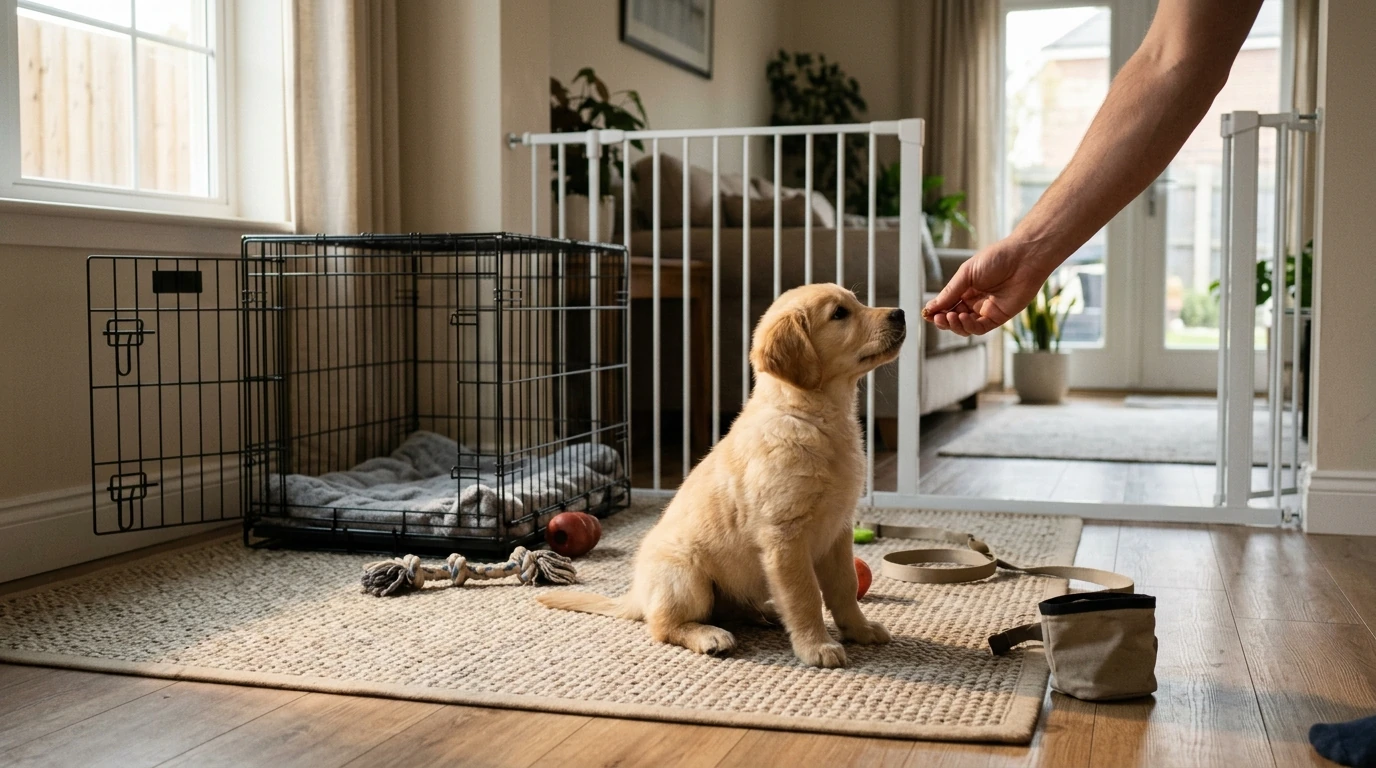
- Pick “puppy zones.” Create a sleeping area, a play area, and a clear potty exit path to reduce roaming and surprise accidents.
- Choose a reward system. Use tiny treats, a few pieces of kibble, a toy toss, or quick praise. Keep rewards immediate and frequent.
- Decide household rules early. Furniture access, jumping, feeding spots, and door manners should be consistent across everyone in the home.
- Prep essentials. Crate or playpen, enzymatic cleaner, chew toys, a long line, a treat pouch, and baby gates do more than “training tips” ever will.
- Schedule a vet check. Ask about vaccine timing and what types of outings are safest for early social exposure.
Daily Rhythm That Helps Puppies Learn Faster
Puppies learn best when the day is a loop, not a guessing game. A simple rhythm also helps you spot patterns (like accidents after play or biting during evening zoomies).
- Use a consistent loop: potty → play/training → food/water → calm time → nap (repeat).
- Plan naps proactively. Overtired puppies bite more and lose bladder control faster.
- Keep sessions short. Do 1–3 minute micro-sessions several times a day instead of one long lesson.
- Track inputs and outputs. Meals, water, potty times, accidents, and triggers help you adjust quickly.
- Use calm transitions. After play, offer a chew or lick mat to help your puppy downshift.
Sample Weekday Puppy Schedule (Adjust for Age and Vet Guidance)
| Time | What to Do | Goal |
|---|---|---|
| 7:00 | Potty trip + reward | Start the day with success |
| 7:10 | Breakfast + water | Predictable digestion and energy |
| 7:30 | Potty trip | Prevent post-meal accidents |
| 7:40 | 2–3 minute training + play | Practice one skill while fresh |
| 8:10 | Nap in crate/playpen | Build calm + independence |
| 10:00 | Potty trip + short walk/yard sniff | Reinforce outdoor toileting |
| 12:00 | Lunch (if age-appropriate) + potty | Regular schedule helps house-training |
| Afternoon | Alternating potty, play, naps | Reduce overstimulation |
| Evening | Gentle training + handling practice | Improve cooperation and confidence |
| Before bed | Potty trip + calm settle | Fewer nighttime wake-ups |
House-Training: A Clear Plan for Fewer Accidents
House-training is mostly management plus timing. The goal is to prevent indoor practice and heavily reward outdoor success.
- Take your puppy out frequently: after waking, after eating/drinking, after play, after training, and every 30–90 minutes depending on age and progress.
- Use one spot and one cue. Calmly say “go potty,” wait, and reward immediately after they finish.
- Supervise indoors. Use a leash-to-waist, baby gates, or a playpen so accidents don’t happen “in secret.”
- Handle accidents correctly. Interrupt gently, go straight outside, and reward if they finish outdoors. Clean thoroughly with an enzymatic cleaner.
- Expect setbacks. Excitement, visitors, growth spurts, weather changes, and schedule shifts can cause regressions—temporarily reduce freedom and increase potty trips.
For additional house-training fundamentals, see the Humane Society’s guidance on house training your puppy.
Crate and Alone-Time Skills Without Stress
A crate (or playpen) helps with safety, naps, and house-training—when it’s introduced as a comfort zone, not confinement.
- Make it “good things happen.” Feed meals in the crate, drop in treats, and offer long-lasting chews. Never use it for punishment.
- Start tiny and build. Do 30–120 second reps where your puppy stays calm, then gradually add time.
- Keep exits and returns boring. Calm, predictable comings and goings prevent worry from becoming a habit.
- Night routine: last potty trip, then crate near the bed at first if it helps your puppy settle.
- If whining escalates, reassess. Too much duration, too much energy, or a real potty need are common causes—respond consistently and without drama.
Week-by-Week Starter Plan (4 Weeks)
Week 1: Routine and trust
Week 2: Foundational cues
Week 3: Impulse control
Week 4: Generalize and strengthen
Core Commands and Games That Teach Real-Life Manners
For more training basics and age-appropriate expectations, the AKC has a helpful overview of puppy training basics.
Socialization: Safe, Positive Exposure (Not Forced Greetings)
The AVSAB outlines why early, safe social experiences matter in its Puppy Socialization Position Statement.
Common Challenges in the First Month (And What Helps)
Printable Tools That Make Training Easier to Stick With
Recommended Digital Helps (Instant, Printable)
- New Puppy Training Starter Guide (Printable eBook) — a structured 4-week routine you can follow day by day.
- Minimalist Travel Packing Planner (Digital) — useful for organizing a simple puppy “go bag” for vet visits, puppy class, or weekend trips.
FAQ
How long does house-training usually take?
Many puppies improve in a few weeks with consistent supervision and rewards, but reliable house-training can take a couple months (or longer) depending on age and routine. Setbacks are normal—tighten management and increase potty trips when they happen.
What is the best way to stop puppy biting?
Redirect biting to appropriate chews, end play for a brief break when your puppy gets overstimulated, and reward gentle interactions. Adequate sleep is a major factor—overtired puppies tend to bite more.
When can a puppy start socializing outside?
Follow your veterinarian’s guidance on vaccines and safe exposure. Early on, choose lower-risk options like observing from a distance, carried outings, or controlled playdates with healthy, vaccinated dogs.











Leave a comment